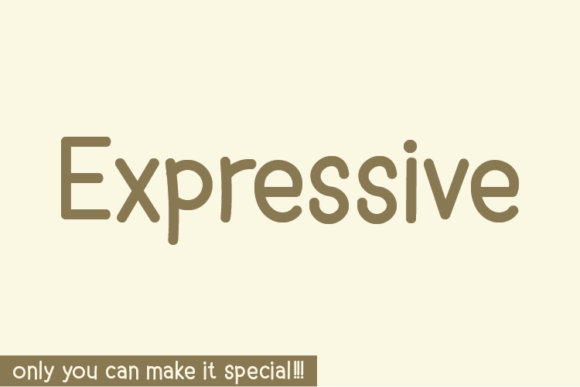
Expressive Font for Business
As a small business owner, I know how important it is to create a brand that feels consistent and professional. One of the easiest ways to achieve this is through the right font choice. That’s why I’ve been using Expressive, a natural handwritten font that adds personality without sacrificing clarity. It’s perfect for everything from logos to social media posts, and it helps my brand stand out in a way that feels authentic.
What Makes Expressive Unique
Expressive is a script amp font with a distinct handwritten style. Each character maintains its own unique shape and flow, which gives it a personal, almost artisanal feel. Unlike other fonts that might feel too rigid or overly stylized, Expressive strikes a balance between casual and refined. It’s not just a pretty font—it’s one that can be used across multiple touchpoints without looking out of place.
The key feature of Expressive is that it doesn’t alter any node in the characters’ indentation. This means that every letter has a natural rhythm, making it feel more like a real hand-drawn typeface. For businesses that want to communicate warmth and creativity, this is a big plus. Whether you’re designing a logo or creating a social media graphic, Expressive brings a sense of approachability that can help connect with your audience.
How to Use Expressive in Real Business Materials
I’ve used Expressive in a variety of business materials, and it consistently delivers. For example, when designing a bakery logo, I paired it with a clean sans serif font to create a contrast that felt both modern and inviting. The result was a brand that felt fresh and trustworthy, which is exactly what I needed for a new food business.
On product labels, Expressive adds a handmade quality that appeals to customers who value authenticity. For a handmade candle brand, I used it on the label text, and it made the packaging feel more personal. It also works well for packaging design, especially when paired with a simple background and minimal color palette. The font stands out without overwhelming the design.
When it comes to digital marketing, Expressive is great for headlines and call-to-action buttons. On Instagram posts and Pinterest graphics, it adds visual interest while still being easy to read. I’ve also used it in website banners and email newsletters, where it helps draw attention without being distracting.
When to Use Expressive as a Display Font
Expressive is best suited as a display font or accent typeface. It works well as a headline or logo font because of its strong visual presence. However, it’s not ideal for long blocks of text. For body copy, I always pair it with a more readable font, like a serif or sans serif typeface.
One of the benefits of Expressive is that it can be used in different sizes and weights. For example, I use it at larger sizes for headings and smaller sizes for subheadings. This flexibility makes it a versatile tool for branding projects, whether I’m working on a website, a flyer, or a menu.
It’s also useful for creating stickers, thank-you cards, and promotional materials. The handwritten look adds a personal touch that can make a big difference in customer engagement. When I send out custom thank-you notes with Expressive, clients often comment on how nice it looks and how it feels more thoughtful than a standard printed note.
Readability and Practical Considerations
While Expressive is visually appealing, it’s important to consider its readability in different contexts. On small labels or mobile screens, it can be harder to read if not used carefully. That’s why I always test it in the actual size and setting it will be used. For example, when designing a product label, I check how it looks at 8pt or 10pt to make sure it’s still legible.
For printed packaging, I recommend using it in a larger size and pairing it with a simpler font for secondary text. This ensures that the main message is clear while still maintaining the artistic flair of Expressive. In digital formats, like social media thumbnails, I keep the text short and use it as a focal point to catch attention.
Font Pairing Tips for Small Businesses
One of the best ways to use Expressive is by pairing it with other fonts that complement its style. For instance, pairing it with a clean sans serif font like Helvetica or Arial creates a balanced look that’s both modern and professional. If I’m working on a more traditional brand, I might pair it with a classic serif font like Georgia or Times New Roman.
Another effective pairing is using Expressive as an accent font alongside a bold display font. This works well for headers and titles, where you want to highlight certain words without making the whole text too busy. I’ve also found that using it in combination with a minimalist design can make a brand feel more elegant and cohesive.
When choosing a font pairing, I always think about the overall brand identity. If the business has a playful or creative vibe, Expressive can be used more prominently. For a more formal or professional brand, it’s better to use it as a subtle accent.
Testing and Licensing Considerations
Before using Expressive across an entire brand, I recommend testing it in different applications. Try it on a sample logo, a business card, and a social media post to see how it looks in real-world scenarios. This helps ensure that it fits the brand’s aesthetic and functions well in all intended uses.
Another important consideration is font licensing. Make sure to check the commercial license for Expressive before using it on products, packaging, or client work. Some fonts have restrictions on how they can be used, so it’s always good to verify that you’re compliant with the terms.
Overall, Expressive is a valuable addition to any small business’s design toolkit. Its unique handwritten style adds character and consistency to branding efforts, making it easier to create a professional and memorable brand presence. Whether you’re designing a logo, a menu, or a social media graphic, Expressive offers a versatile and expressive solution that can elevate your business’s visual identity.